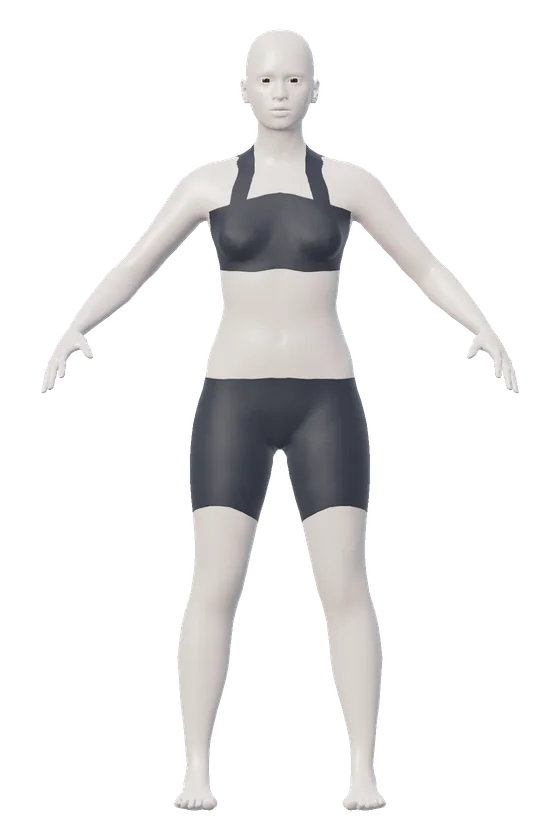
The 3D body visualizer for drawing opens on a figure in a plain clay finish, with no skin color between the eye and the form. The figure is a female body 170 cm (5 ft 7 in) tall and 60 kg (132 lb). Turn the figure to any angle, change its height, weight, build or shape, and save the view as a PNG.
How the 3D body visualizer for drawing works
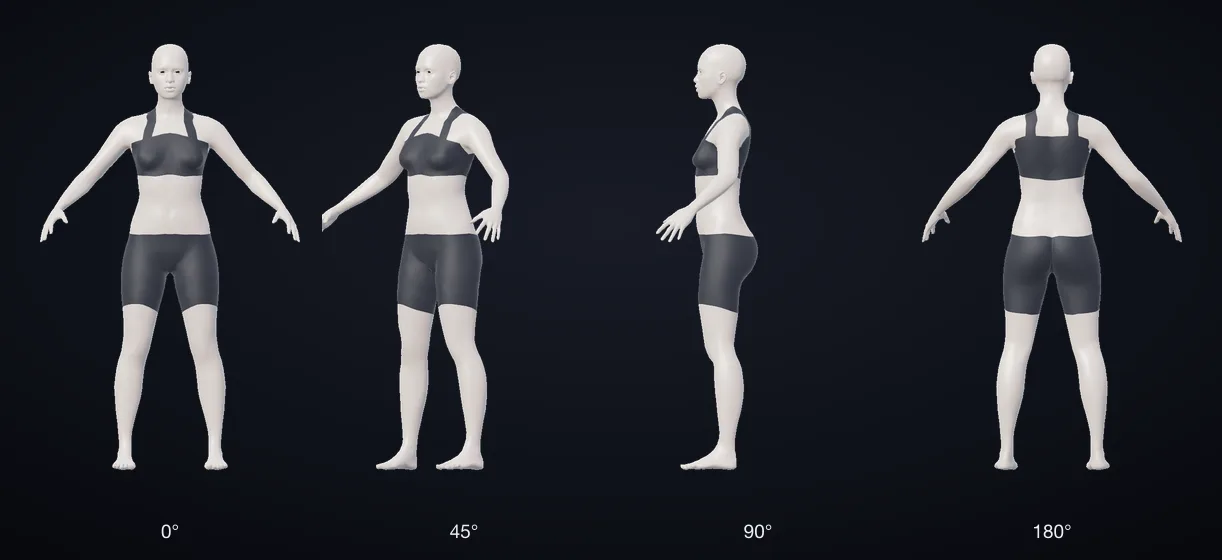
The 3D body visualizer for drawing works as a turntable for one standing figure. A drag turns the figure in any direction. A pinch, or the plus and minus buttons, zooms the view. The Front, Side and Back buttons jump to 3 set views, and the round control starts a slow spin.
The body follows the numbers. Height scales the frame, and weight changes the volume. The Build slider moves the figure from softer to athletic. The shape pictures change where the weight sits: 7 shapes for the female figure and 5 for the male figure.
The Save image button downloads a PNG of the current view. Saved pictures are free to use, including in commercial work. The figure stands in one pose and cannot be posed, and it has the proportions of a real adult body with no style settings.
3D body visualizer for drawing formula
The 3D body visualizer for drawing gives 3 proportions that help set up a figure drawing. Each proportion is one measurement divided by another.
| Proportion | Formula | On the opening figure |
|---|---|---|
| Legs to height | Inseam ÷ height | 79.7 ÷ 170 = 0.47 |
| Shoulders to height | Shoulder width ÷ height | 35.8 ÷ 170 = 0.21 |
| Waist to hips | Waist ÷ hips | 71.3 ÷ 96.3 = 0.74 |
Figure drawing classes also count height in heads: the height of the figure divided by the height of its head. The Figure Drawing LAB of the University of Evansville puts the average human figure at 7 heads high and says most people are 6 to 7 heads. The ruler beside the figure is marked every 10 cm, or every 6 inches, for measuring the head against the body.
3D body visualizer for drawing conversion chart
The 3D body visualizer for drawing shows the figure's real height. To draw the figure to scale, divide the height by the scale.
| Scale | A 170 cm figure on paper | In inches |
|---|---|---|
| 1:4 | 42.5 cm | 16.7 in |
| 1:5 | 34.0 cm | 13.4 in |
| 1:6 | 28.3 cm | 11.2 in |
| 1:8 | 21.3 cm | 8.4 in |
| 1:10 | 17.0 cm | 6.7 in |
To study how muscle changes the outline, see one weight at three builds. The body shape visualizer lines up every shape at one height and weight. For exact proportions, open the figure with its tape lines on and type the measurements. The guide on how a 3D body model is made explains the mesh under the figure.